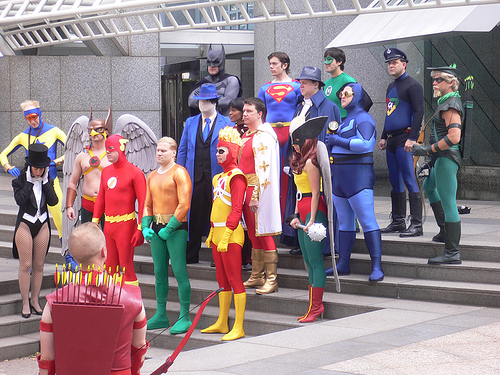
Monday, December 26, 2016

Your Body and Your New Year’s Resolutions

Thinking about your New Year’s resolutions? Are resolutions about your body among them? (“I’ll go to the gym more,” “I’ll eat healthier.”) These may be admirable goals, but think about adding this resolution: I’ll work to become more comfortable with the body I have.
Yes, it would be good if you exercised regularly and ate healthily, but it wouldn’t guarantee that your body will look the way you want. Feeling badly about your body as it is now makes you feel badly about yourself. And that's a yucky way to feel.
Focus instead of the joy of moving your body through space, of the sense of your body as useful. Notice the feel of your muscles as you move—you don't need to be a particular shape to experience that.
Here are some exercises to do to improve your relationship with your body.
It's the Thought That Counts
Become aware of the negative things you tell yourself about your body. For instance, when dressing, a woman may look at her breasts and think that her breasts are too __________ (small, big, droopy, uneven and so on). The adjective "too" is the give away, implying that there is a right way to look. (Okay, there are ideals in each culture about the best way to look, but they are ideals -- not attainable by most people.)
Instead, try to think of your body in nonjudgmental ways -- without adjectives that are implicitly critical. Here are some examples:
         "I have smallish breasts that tend to droop"
         "I have a receding hairline that starts about two inches from the top of my forehead"
                  "I have crow's feet around my eyes"
Notice that these examples are purely neutral descriptions and don't make judgments. Try writing down some descriptions of your body as a whole, and different parts of your body. Then look carefully at the words you've used, particularly the adjectives, and remove the critical, disparaging words.
Go To The Mirror
Don't want people to see your body without a lot of clothes? Go to the mirror! Put on clothes that are form fitting (or be nude) and stand in front of a full-length mirror.
Try looking for 5-10 minutes at the body parts you like least, substituting judgmental self-talk with the neutral language that I described earlier. At some point, you should have an experience that resembles repeating a word or phrase over and over again -- it starts to lose its meaning. In this case, your discomfort with that part of your body should start to lessen as the negative meaning you've attributed to that body part lessens.
Don't Hide
Much as you might wish otherwise, you've only got one body, and the shape of it now is the shape of you now. Be here now. If there are activities you're waiting to do or places you want to go when you body is in "better" shape, don't wait. Do it them now.
A Word About Exercise and Eating, Rights and Responsibilities
Accepting your body as it is doesn't mean that it's okay to be (or become) a sloth, or that it's okay to eat lots of junk food or even lots of food -- more than your body needs.
You have the right to enjoy your body, whatever its current shape. Part of what this means is to get past treating your body as an object (to be criticized or admired). Get inside your body so that feels more like a part of you -- a part that is useful and makes you feel good in your body (rather than feel good about your body). So exercise -- it is many and varied forms -- is a good thing because it allows you to feel your body's sense of agency -- your body in action. Consider any of these activities: taking a brisk walk, lifting weights, mopping the floor, painting a wall, going for a jog. Each and every one of these activities can leave you with a sense of your body feeling useful, strong, empowered and handy. Such activities, if you focus on the actions of your body while doing it and afterward, can leave feeling grateful for your body and what it is able to do. And that's part of the "responsibility" to your body -- to treat your body reasonably well.
Copyright 2016 by Robin S. Rosenberg

Robin S. Rosenberg, Ph.D., ABPP is a clinical psychologist in private practice in San Francisco and Menlo Park, California. Rosenberg specializes in treating people with eating disorders, depression and anxiety. She often writes about the psychology of superheroes and has co-authored several psychology textbooks, including Abnormal Psychology and Introducing Psychology: Brain, Person, Group. To find out more about Dr. Rosenberg and her work, go to her website, www.DrRobinRosenberg.com. For Dr. Rosenberg's brief, easy-to-read guide Improving Your Relationships with Your Body, click here.

Friday, March 27, 2015

Looking for a partner? The Four Buckets, Part 2

In my last column (click here to read it: http://psychablog.blogspot.com/2014/11/looking-for-partner-four-buckets-part-1.html), I wrote about a way to think about “fit” when looking for a romantic partner.  I discussed an exercise I call the four buckets, in which Step 1 is to think about and divide up a possible partner’s qualities/behaviors:

Bucket 1: Qualities you require in your relationship: Non-negotiable. Examples: treats me with respect, funny.
Bucket 2: Qualities that are nice to have but it depends on the whole package. These are qualities you’d like a partner to have, but you’re realistic. Examples: adventurous, dependable, spontaneous.
Bucket 3: Qualities that aren’t great but it depends on the whole package. This is the flipside of bucket two. Examples: messy, often late, overly dramatic.
Bucket 4: Qualities to which you say “no way.” Non-negotiable. Examples: disrespectful, abusive.

Once you’ve got your bucket lists, Step 2 fleshes them out as specifically as possible. For instance, how will you know whether your date is treating you with respect? What are the behavioral indicators? What do you mean, specifically, by messy—and how can you tell whether he or she is messy? When you say adventurous, in what contexts? As a result of this refining process, you may find that your lists change somewhat.

Step 3 is to look for or even create situations that make it easier to determine the extent to which the other person has these attributes. For instance, let’s assume you put respect in Bucket 1, and to you that means, in part, that the person doesn’t put you down for holding different opinions. Initiate discussions about controversial topics about which you think you might not agree. (Or you can even play devil’s advocate and take the opposite side, just to see how he or she interacts) Notice how he or she responds when you take that opposite stance. How does he or she treat you?

Similarly, if “overly dramatic” is in your Bucket 3 and someone seems dramatic (but may not seem “overly” dramatic at that point), see what happens when you get “calmer” in response. Does he or she ramp up and get more dramatic? If so, that might suggest a fit that isn’t optimal.

The bottom line for Step 3 is to test the waters early. Sometimes creating conflict is a good way to see how you handle conflict with each other. (It is the interaction between the two of you that will determine the fit.) Typically when dating or in the early phase of a relationship, people are on their best behavior; they’re more willing to be generous, to defer to the other person. So creating a mild to moderate amount of conflict may take work. In those early phases, don’t always be so agreeable about what movie to see or where to eat. If you both are very agreeable, even if you don’t care what you see, assert an opinion so that you can see how he or she responds.

These steps will help you collect “data” early about the qualities and behaviors that matter to you. This process isn’t only for romantic relationships. It can work for friends as well.

Dr. Robin S. Rosenberg is a clinical psychologist in the San Francisco Bay Area. In addition to her coaching and psychotherapy practices, she writes college level psychology textbooks. She also writes for a general audience using fictional characters—such as superheroes, Harry Potter, and the Girl With the Dragon Tattoo—to illustrate psychological phenomena.

Visit her on the web at www.DrRobinRosenberg.com


Friday, November 7, 2014

Looking for a partner? The Four Buckets, Part 1


In the sphere of “romance,” sometimes we go looking for a boyfriend or girlfriend with qualities that are the opposite of our last boyfriend or girlfriend. Just as some military strategies are crafted with an eye to how the last war should have been fought, our dating strategies can be crafted with an eye toward “undoing” the problems of the previous relationship.

That’s a fine strategy—as far as it goes. But I’d encourage you to think more broadly. One exercise I’ve found useful with my clients is what I call the four buckets.


The buckets are metaphorical bins—categories about qualities in a prospective mate. The first bucket (the first category) are qualities/behaviors that you require. They are “must haves” for anyone with whom you have an intimate relationship. Non-negotiable. Examples include: treats me with respect; makes me laugh, doesn’t drink to excess. But think more specifically about the qualities in this bucket. What, exactly, do you mean by “treats menwith respect”? How will you know whether he or she is being respectful or disrespectful? When dating someone, what behaviors will indicate to you whether he or she is being respectful?

The second bucket is for qualities that are nice to have but it depends on the whole package. The idea with this bucket is that there are qualities you’d like an intimate partner to have, but you’re realistic. There is no Mr. or Ms. Right, so you have to flex. You might want to have a partner who is funny, smart, adventurous, dependable, rich, etc., but you’ve put the most important qualities in the first bucket (required). So any other positive qualities are gravy. An intimate partner should have some of the qualities in this bucket, but not all. Once you’ve got your list for this bucket, do what you did with the first bucket: Figure out how you’ll know whether the person has any of these qualities. For instance, what do you mean by funny? Funny across the board, or mainly he or she makes you laugh when you feel down? Risque, sarcastic humor? Self-detracting humor or humor that makes fun of others? Of you?

The third bucket is for qualities that aren’t great but it depends on the whole package. This is the flipside of bucket two. Qualities that you’re not thrilled about but you can live with at least some of them, depending on what the positive qualities are. Examples for this bucket include: messy, often late, overly dramatic, emotional swings.  In an intimate relationship, the person may be able to improve a bit on these qualities, but don’t count on it. Can you live with someone who has these qualities? As with the other buckets, get specific about how you’d know whether the person has these qualities.

The last bucket is qualities to which you say: no way. Absolutely not. Non-negotiable. You see this quality and you run the other way (or you should). Examples: disrespectful, abusive. As with the other buckets, figure out how you’d know the person had these qualities. What behaviors would indicate these qualities?

More about the buckets in my next column.


Dr. Robin S. Rosenberg is a clinical psychologist in the San Francisco Bay Area. In addition to her coaching and psychotherapy practices, she writes college level psychology textbooks. She also writes for a general audience using fictional characters—such as superheroes, Harry Potter, and the Girl With the Dragon Tattoo—to illustrate psychological phenomena.

Visit her on the web at www.DrRobinRosenberg.com

Tuesday, December 17, 2013

There’s No Defense for Affluenza


[From my piece in Slate.com]
Ethan Couch, 16
Screenshot from ABC affiliate WFAA
You may have heard about Ethan Couch, a 16-year-old who drove while drunk and killed four people and injured two others. Couch had three times the legal limit of alcohol in his blood (that’s the limit for adults—minors shouldn’t have any alcohol in their blood). He also had Valium and some THC in his system. Stolen beer was in the pickup truck he was driving, which was owned by Couch’s father’s company. When Couch drove too fast, his companions asked him to slow down; instead, he sped up.
Rather than the 20 years of jail time the prosecution asked for, Texas Judge Jean Boyd gave Couch absolutely no jail time and instead sentenced him to 10 years of probation and time in a long-term treatment facility. That facility costs $450,000 per year, paid for by Couch’s wealthy parents. Among other amenities, it offers equine therapy and organic food choices.
Many people have railed against the judge’s sentence, which was drastically different from that given to others who have killed people while driving drunk. One mitigating factor that worked for Couch: a creative defense team. During the sentencing phase of the trial, the defense argued that Couch shouldn’t be held as responsible as he might be because his parents were so permissive in their style of child rearing that Couch did not experience socially appropriate consequences for his socially inappropriate behavior.
The defense’s argument for a lenient sentence is summed up in the word affluenza. (The term affluenza apparently came into public use with a 1997 PBS special and subsequent book of that name. In that original context, the term referred to increasing materialism and “keeping up with the Joneses.”) The defense team seems to have made up its own definition to argue that, because of his family’s wealth and child-rearing style, Couch never learned that his actions had consequences. Psychologist for the defense Gary Miller is reported to have said that Couch’s parents gave their son whatever he wanted—including “freedoms no young person should have.” Supporting his argument, Miller related an incident that happened when Couch was 15: Police caught him passed out in a pickup truck with a naked 14-year-old girl.
I’m a clinical psychologist, not a lawyer. My interest in this case is from a psychological point of view: the issues the case raises about the definitions and diagnoses of mental illness and why Couch should—or shouldn’t—be held responsible for his behavior.
Examining the psychological underpinnings of the misnamed “affluenza” defense, there’s no “there” there. Let’s take Couch’s history of a lack of appropriate consequences for his behavior. In essence, this part of the defense’s argument rests on the assumption that knowing the law is not enough to deter someone from criminal acts. Instead, the person must have experienced deleterious consequences for his or her socially inappropriate or illegal behavior in the past. Otherwise (it seems to follow), the threat of legal consequences will appear empty since the person hadn’t experienced consequences before.
This argument doesn’t hold water for at least two reasons. First, even though Couch’s parents may not have taught him that his inappropriate behavior has negative consequences, this doesn’t mean that he was incapable of learning this lesson in other areas of his life. We know that people are sensitive to context and accurately distinguish between consequences that will occur in one situation but not in another. Even rats and other animals learn to make analogous types of discriminations based on context. They learn that if a light is on when they press a lever, they’ll receive a food pellet, but when the light is off they won’t. If you’ve spent time around preschoolers you know that they are sensitive to context—to how much they can “get away with” when Person A is in charge of them versus Person B. High-school students learn that a substitute teacher has less authority, and thus they may act up with him or her in ways they would never consider with their regular teacher.
Couch’s wealth and privilege may have led him to feel immune from the usual consequences of certain behavior, but somewhere along the way he understood that there were at least some consequences for some of his actions. For instance, he didn’t drop out of high school. Even though school can be unpleasant or difficult, he somehow learned that there would be untoward consequences if he didn’t participate.
Let’s look at a mirror situation: poor teens whose parents didn’t appropriately discipline their children because the parents were working two jobs to put food on the table. These children may have gotten away with socially unacceptable or even unlawful behavior in the past and not suffered any negative consequences. But would their defense team successfully argue that these youths were less responsible than others? I don’t think so, even though the same issue is at the core: a lack of consequences from people in authority for socially undesirable behavior.
A second interesting facet of this whole sorry situation, to me, is the confusing message the judge is sending to Couch by allowing him to live in a “private rehabilitation home.” If Couch’s affluenza means that he didn’t receive appropriate consequences for his behavior in the past, what is the judge’s take-home message to him? The message is that his wealth and privilege can obviate the negative consequences of his criminal behavior. That wealth and privilege can buy someone’s way out of going to jail or to programs that are part of the public juvenile justice system. Judge Boyd’s cure for affluenza seems to be more of the same.
A central puzzle in this situation concerns the concept of diagnosis. Affluenza seems to have been used as a diagnosis to explain his behavior and why he shouldn’t be criminally responsible. The logic seems to be that young people with this affluenza suffer from a psychological deficit or even a developmental disorder: “I am not responsible for my behavior because my parents didn’t hold me accountable for my behavior. I never really learned (from my parents) that my untoward actions have consequences. Therefore, I should not be held accountable now—or at least I should be held less accountable than someone who experienced first-hand that undesired behavior has negative consequences.”
But affluenza (even the inaccurate way it was used in this case) is not a mental disorder. It isn’t identified by any mental health professional organization or diagnostic manual. It is not a diagnosis for a mental disorder. In the hands of this defense team, it is a fabrication invented to serve a specific purpose. Made-up psychological mumbo jumbo to mitigate responsibility reflects poorly on the mental health profession. Don’t tar the rest of us with this brush! Let’s hope affluenza goes the way of the Twinkie defense.
Robin S. Rosenberg, a clinical psychologist in San Francisco, is the author of Superhero Origins and Abnormal Psychology. Visit her website

Sunday, June 16, 2013

Forging Man of Steel: A Review of the Film


I like Superman—as a character, as a superhero, as an embodiment of (certain) values. I had looked forward to seeing Man of Steel. Although I was disappointed (more on that later), I’ll start with what I liked. Warning: I’m assuming that readers have a basic knowledge of Superman’s origin story. I discuss some details of the film, so you may want to see the film before reading this review.
First, I liked this incarnation of the “villain” of Zod. In What Is a Superhero?, I have an essay on the typology of supervillains (“Sorting out Villainy”). According to my classification scheme, Zod is a heroic villain. His actions are motivated by—what is to him—an altruistic cause (saving Krypton/Kryptonians). This is made explicit at the beginning of the film, when Zod says to Jor-El (Superman’s father) that he’s taken up the sword against his own people for a greater good. Jor-El, too, could be considered a heroic villain in that he’s done something against Kryptonian law, but is doing so for what he believes is a greater good. The importance of point-of-view in defining “good” versus “evil” is nicely portrayed. It’s not a “black and white” morality tale.

Second, I like the way the film (accurately) portrayed the social challenge of being gifted (i.e., “super”). Like many superheroes, gifted children in our world sometime hide their talents and abilities from others for fear of social ostracism or harassment. (In Clark Kent’s case, though, it was because the government might want to “take” him.) Like some gifted people in our world, the young Clark views his budding powers as burdens—to be hidden. Clark’s father explains that one day he’ll view his abilities as gifts, not burdens. This is also true for gifted people in our world. (For more about the ways that superheroes are similar to and different from gifted individuals, see my essay with psychologist Ellen Winner, “Are Superheroes Just SuperGifted?” in Our Superheroes, Ourselves.)

Third, this version of Lois Lane is the best screen version thus far. She’s smart and spunky but not high strung or temperamental. It’s easy to see why Clark would like her (which isn’t true of the Loises in the other films). She’s an admirable character. Way to go!

The aspects of the film that I didn’t like were, unfortunately, numerous. One fundamental flaw rests on the reason for Jor-El and Lara trying to conceive “naturally” on Krypton: To bring a child into the world that wasn’t pre-conceived or pre-programmed with a destiny. (On this version of Krypton, it seems that children’s DNA is genetically engineered to fill society’s niches—soldier, scientist, etc.—and fetuses are externally incubated.) Yet the young adult Clark, on Earth, discovers a holographic-type projection of his long-dead father, and this Jor-El tells Clark what Clark’s destiny is—why he was sent to Earth!! He’s “supposed to guide humans, to be a force for good. You will help them to accomplish wonders.” This hypocritical stance about destiny versus free choice is a major plot flaw, in my mind.

Another significant problem with the plot rests on the idea that humans would freak out if they knew an alien lived among us. Yet by the end of the film, after downtown Metropolis has been practically laid waste by aliens, there is no sense that humans are freaking out about Superman being an alien, or even freaking out that there was an alien battle on Earth. This basic fear of people’s response to knowing about aliens, which drives much of story of Clark’s childhood, is carelessly thrown off by the end of the film.

And then there is the wanton destruction, the endless fight scenes, explosions, buildings collapsing. It became boring. I couldn’t help but notice that the Daily Planet building took its share of damage, yet by the end of the film, the Planet’s office looks fine, and there no sense of the trauma that Metropolis’s citizens must have experienced since their city was a center ring in which the aliens fought. And the city is magically clean and rebuilt by the end! Yes, we have to suspend disbelief in most superhero films (perhaps Christopher Nolan’s Batman films being the exception), but not this much.

The film was called Man of Steel, but it felt that too little of the film was actually about Superman. It was really about Jor-El versus Zod, with Superman acting as proxy for Jor-El. I wanted to see more character development about the adult Clark/Superman. In a film over two hours long, it seemed that his screen time—when he wasn’t in a fight scene—was too brief, totaling perhaps 20 minutes. (If you were to time it, it’s possible that there was more screen time on this. But it felt too brief and his “character development” superficial.)

This contrasts dramatically with the Nolan Batman films. Which is ironic because the script was written by the same folks who wrote Batman Begins: Jonathan Nolan and David Goyer. Whereas Batman Begins provides wonderful and psychologically insightful character development, Man of Steel does not.

References:
Rosenberg, R. S. (2013). Sorting out villainy: A typology of villains and their effects on superheroes. In R. S. Rosenberg & P. Coogan (Eds). What is a Superhero? New York: Oxford University Press.
Rosenberg, R. S., and Winner, E. (2013). Are superheroes just supergifted? In R. S. Rosenberg (Ed). Our Superheroes, Ourselves. New York: Oxford University Press.

Copyright 2013 by Robin S. Rosenberg.
Robin S. Rosenberg, Ph.D., ABPP is a clinical psychologist in private practice in San Francisco and Menlo Park, Calif. She often writes about the psychology of superheroes. Her latest books are What Is a Superhero? and Our Superheroes, Ourselves. Her website is www.DrRobinRosenberg.com.

Monday, February 25, 2013

Superhero for children with cancer


Superheroes inspire some of us to be “heroes” in our everyday lives. For others of us, simply surviving can be a heroic effort on a daily basis. People who are depressed or otherwise suffer from debilitating forms of mental illness “fight to survive” on a daily basis. People with certain medical illnesses or conditions similarly “fight” heroically each day.

Nistar is a comic book story about the heroic fight against cancer—specifically pediatric cancer. The protagonist is a superhero who fights the good fight against cancer. Shira Frimer, the author of Nistar, is trying to raise enough money to publish the book and give free copies to children with cancer throughout the world. Click here to find out more about Nistar and how you can help.

Wednesday, January 30, 2013

Superheroes To The Rescue--For Real


Flying like Superman in virtual reality can make you more helpful in real life. That's what my colleagues and I found in a recent study. At Stanford's Virtual Human Interaction Lab, Shawnee Baugman, Jeremy Bailenson, and I had participants enter a virtual environment and they were either given the power of flight or rode as passengers in a helicopter. They were then assigned one of two tasks: help find a missing diabetic child or tour a virtual city. Regardless of which task they performed, people who had the power of flight were significantly more likely to help a researcher pick up spilled pens in real life than the helicopter passengers were. 


Embodying a superpower in virtual reality may prime players to ‘think like superheroes’ and thus facilitate subsequent helpful behavior in the real world. Alternately, participants who could fly in the game may have felt like more active participants than those who passively sat in the helicopter while performing tasks, and this more active involvement may have induced their subsequent behavior.

To read the paper in the journal PLOS ONE, click here. To see a short video clip about the study, click here.


And for more about superheroes, take a gander at my new book:


This is a book about seven superhero origins stories, what they reveal about the superheroes' personality, how they reflect the findings of psychological research, why we're interested in their origin stories, and what their stories can teach us about ourselves.

[photo credit: Cody Karutz]

Thursday, January 24, 2013

Another Cosplay Survey: The Psychology of Cosplay 2


Hello to all you folks who cosplay. Here’s the link to a survey on cosplay that my colleague, Andrea Letamendi, and I are conducting.


We want to know more about the psychology of cosplay and hope you can help us. We’ll post the results this summer.

Thanks!

The Psychology Behind Superhero Origin Stories

From my article in Smithsonian Magazine:


“Why is every superhero movie an origin story?” complained Entertainment Weekly film critic Adam Markovitz after seeing a trailer for this summer’s Man of Steel—yet another version of the 75-year-old Superman saga. Perhaps we love origin stories, Markovitz suggested, because they “show the exact moment when a normal guy goes from being Just Like Us to being somehow better, faster, stronger.”
I’m inclined to disagree. As a clinical psychologist who has written books about the psychology of superheroes, I think origin stories show us not how to become super but how to be heroes, choosing altruism over the pursuit of wealth and power. I’ve learned this through hundreds of conversations at comic book conventions, where fans have been remarkably candid about their lives and the inspiration they draw from superhero stories.

Read more: http://www.smithsonianmag.com/arts-culture/The-Psychology-Behind-Superhero-Origin-Stories-187938991.


Friday, January 4, 2013

Holy Wonder Woman! A Review of Wonder Women! The Untold Story of American Superheroines


I had the opportunity to see documentary Wonder Women! The Untold Story of American Superheroines recently. The film provides a history of superheroines, beginning with Wonder Woman, overlaid with a history of women in American culture and women’s rights during the same decades. It was interesting to see Gloria Steinem talking about feminism, Ms. Magazine, and Wonder Woman in the same breath, and to see many women (and men)—some famous, some not—talk about the ways in which Wonder Woman has been an icon of female power and inspiration.

Wonder Women
The film also includes what the director or interviewees see as the descendants of Wonder Woman in popular culture:The Bionic Woman, Ripley in the Alien films, Sara Conner ofTerminatorXenaBuffy the Vampire Slayer, and evenCharlie’s AngelsCharlie’s Angels seems like a bit of a stretch, but the film makes a case for it.


More interesting psychologically are the parts of the film that talk about how icons in general, and superheroines in particular, inform us about what we should aspire to be. How they create templates to which we gravitate and fuel our imaginations, our self-images, and who we might want to become. Some of us may resonate with (or aspire to) Sara Conner’s tough, capable, and single-minded way of being strong. Others of us may resonate with Wonder Woman’s model of compassion, bravery, and strength. Or Buffy’s sense of humor in the face of adversity. There is something for everyone in the pantheon of superheroines.

I wish the film had spent more time on the sexualization of superheroines. We all know that superheroines in comic books are drawn with marvelous figures in skimpy costumes, and film and TV superheroines as similarly endowed and attired. The film touched on the issue of superheroines always being sexy, and sexy being equated with power, but a longer discussion of the implications of this for the audience would have been welcome. For instance, what does it mean that superheroines sometimes use their attractive physical appearance to achieve their goals? (Though Wonder Woman rarely does this, other superheroines do.) And what are the effects on females in the audience who see that superheroines only come in a certain size “package,” adorned a particular way. (For interesting research related to this in computer games, see Lissa Behm-Morawitz’s research). What does it mean for women and men that superheroines are, by and large, also seen as sex objects in our world? (Click here for research aboutobjectification, in which the experience of being treated as an object results in coming to see oneself that way. Objectification theory was originally conceived of as primarily pertaining to females. The original article by Barbara Frederickson and Tomi-Ann Roberts in 1997.)
I suppose that’s the subject for another documentary.

Copyright 2013 by Robin S. Rosenberg

All rights reserved.
 Robin S. Rosenberg is a clinical psychologist. Her website is DrRobinRosenberg.com. Her most recent book is What’s the Matter with Batman? An Unauthorized Clinical Look Under the Mask of the Caped Crusader.

Sunday, October 14, 2012

Cosplay Survey

To those of you cosplayers who heard--or heard about--the Psychology of Cosplay panel at New York Comic Convention and would like to take the Cosplay survey, click here to go to the survey or go to the URL below:

https://docs.google.com/spreadsheet/viewform?formkey=dG5UWHk0VU94TW5XQ2ZJWmRQekd3YVE6MQ

 I plan to publish the results and will link to them.

Friday, August 17, 2012

How Could She Do That? Compliance, the film—what's going on


Remember a bunch of horrible phone scams to fast food restaurants? The caller posed as a police officer and induced managers to strip search young female employees by saying the young women have stolen from customers? (If not, you can read about it here.) A docudrama film, Compliance, has been made of the worst incident, in which a young employee was detained, strip searched, and perform sexual acts. The story is a true one, and a disturbing one, and the film is similarly disturbing. Disturbing enough that at a screening that I attended yesterday, some people walked out. (This has been true in other cities as well.)

In the nutshell, the police officer ratchets up his requests of the restaurant manager; in turn she is swamped at work and with the approval of the caller (who is posing as a police officer) delegates to others the task of “watching over” the young employee who the police officer has said has stolen money. It starts out having her empty her pockets, then search her pocket, then disrobe to have her clothes searched. It goes on from there. The process resembles that of the participant in Stanley Milgram’s famous obedience study, in which participants were asked to give increasingly larger shocks to another person (unbeknownst to the participants, no actual shocks were administered. Click here for more information about the Milgram experiment.)

Given this incident really happened (in other locales as well—this wasn’t the only place the perpetrator called), how could this happen? We hear about this case, shake our heads and say that if we were the manager, we wouldn’t do anything like that. We’d know enough to say “no.” But would we?

There are several factors that explain how this could happen:
  • ·      At least in the film, the manager was portrayed as clearly identifying with “authority”—the (supposed) police officer. The caller played this up, explicitly joking that she was his eyes on the ground. She was more focused on being a good “assistant” to him, rather than a good, thoughtful person viz her employee. (When the manager’s boyfriend was enlisted to watch the young employee, the manager very much wanted her boyfriend also to be a good assistant to the caller.)
  • ·      The restaurant was very busy that night, and the store was already short-staffed, and earlier in the day had a problem with food refrigeration and so were running out of some foods. The manager was very stressed, and had a heavy “cognitive load”—had many things she was juggling in her head. This would make her likely pay less attention to challenging the police officer or thinking critically about what he was asking her to do.
  • ·      The young employee did not overtly “fight back” (though she did ask to be allowed to leave the room in which she was being detained); it seems clear in the film that she was experiencing some degree of learned helplessness—a situation in which no matter what she did, she couldn’t “escape” from the situation. At the start of her detainment, she had been told that if she cooperated with the strip search it would all be over soon. But it wasn’t over then, and it just kept getting more intense and outrageous. At some point, she likely felt that no matter what she did or how much she protested, it wouldn’t make a difference.


I won’t give too much more away, but if you have the stomach for an intense film with no happy ending, I suggest you see it.

Copyright 2012 by Robin S. Rosenberg


Suggested Reading:

Richer, S. D., Haslam, A., & Smith, J. R. (2012).  Working Toward the Experimenter: Reconceptualizing Obedience Within the Milgram Paradigm as Identification-Based Followership. Perspectives on Psychological Science, 3, 315.

Thursday, July 19, 2012

More on the Psychology of Batman


With the frenzy about Batman this week, here are some links that might be of interest:


Wednesday, July 11, 2012

BATMAN’S MENTAL HEALTH, PART 2


This blog post is adapted from the book What’s the Matter with Batman? An Unauthorized Clinical Look Under the Mask of the Caped Crusader, by Robin. S. Rosenberg.

In my last post, I discussed Batman’s mental health and wanted to “get out of the way” some obvious “issues” that Batman seems to have. I brought up Batman’s lapse in  judgment in taking a minor, Dick Grayson, as a ward and sidekick. I begin this post by continuing the discussion of Batman’s lapses in judgment in taking on additional minors as sidekicks.

Further lapses in judgment came with his taking on each subsequent Robin. In Jason Todd’s case, Wayne struggled against the lesser of two evils; Todd had been trying to steal the Batmobile’s hubcaps and Wayne felt that if Todd weren’t taken in hand and shaped to use his talents for good then Todd would end up on the wrong side of the law.
  Other Robins (Tim Drake and Stephanie Brown) have had that role because they asked Batman to allow them to be Robin. (They were young and the idea of being Robin is exciting and cool, as well as providing a great purpose to their lives.) It’s up to the adult—to Batman—to exercise good judgment, which he didn’t. It may have been bad judgment for him to accede to their wish and continue to allow them to be in the role, but that doesn’t mean Batman has a mental disorder: Bad judgment does not necessarily indicate a psychiatric disorder.
Batman didn’t have anything to do with the most recent Robin—Damian Wayne—assuming that role. Wayne didn’t even know that he had a son until presented with his pre-teen son Damian.[1] Damian’s ascension to the role of Robin occurred during a period of Wayne’s extended absence from Gotham City[2], when the adult Dick Grayson stepped into the role of Batman; it was Grayson who allowed Damian to become Robin. Once Bruce Wayne returned, however, he allowed his son to continue in that role.[3] Given that Damian Wayne had been trained at a young age to kill—by the nefarious League of Assassins—it is (somewhat) understandable that Wayne would want to try to remold Damian to use his talents for good, just as Wayne attempted to do with Jason Todd.

Substance Abuse: Pain Relief
  Batman’s crime-fighting activities can leave his body battered, bruised, or broken. Alfred not only acts as butler to Bruce Wayne and concierge to Batman, he also acts as doctor and nurse to the Caped Crusader—stitching wounds, setting broken bones, even performing some surgical procedures. Batman’s body suffers.
Does Batman take pain medication to help him keep going, and if so, is he “addicted”—does he have a substance abuse problem? Stories don’t often indicate that Batman takes anything to dull his pain, probably because if he did he’d be slowed down and his senses dulled—and make him more likely to get really hurt by a criminal. So it’s not likely that he self-medicates. Most of the time that he’s had a significant injury he seems to do what some people with chronic pain have learned to do: accept the pain, compartmentalize it, and live life anyway.

All That Money
  Wayne is an incredibly smart man who has found a way to make his money grow, and then to divert money to fund his activities as Batman. I don’t see anything about his spending habits that indicates signs of a mental illness. It would be a warning sign if he went on spending sprees and he often purchased unneeded items—this could possibly indicate manic episodes of bipolar disorder.[4] Or if Bruce spent large sums of money to protect himself against an unknown enemy that no one else had reason to believe posed a threat—this could indicate that Wayne might be suffering from paranoia. But that’s not the case. The money he spends to support his activities as Batman, phenomenal though they may be, is well spent to prepare him to fight Gotham City’s criminals.

What Personal Life?
  Bruce Wayne doesn’t have much of a personal life. When he’s not busy as Batman (in or out of the cowl), he’s overseeing the Wayne Foundation (his philanthropic organization) or Wayne Enterprises (formerly called WayneCorp, the company he owns and from which his wealth derives). Moreover, he must devote some time to the parties of the rich and famous (including his own) to keep up his billionaire-playboy façade. He’s juggling multiple full-time jobs. Yes, he tends not to have relationships with people outside of his work life, but the same can be said for many of us—particularly if we spend many hours at work, side by side with our colleagues. Plus, given the secret of the Batman part of his life, it’s hard to let other people in. If and when he does tell a woman he’s romantically involved with about his secret life, she’s likely to get twisted up when he goes to work each night.
This is what happened with Silver St. Cloud; she is a wealthy and sharp woman in Bruce’s circle who deduced that Bruce Wayne is also Batman. Although they love each other, after she witnessed the Caped Crusader fight the Joker she realized that she couldn’t be in a romantic relationship because of the stress of worrying whether he’ll come home each night.[5] One appeal of Catwoman as a romantic partner is that there’s less that Wayne has to keep from her (except his Wayne identity in some stories), and she truly understands who he is as Batman. He is fully known.
  Bruce is also fully known by his butler/sidekick Alfred. Ditto with any of the five Robins. Alfred and each Robin know about Bruce’s dual identities, about his history and vulnerabilities, and about his mission. Wayne is thus truly and fully known and accepted by more people than most of us can claim.[6]


Copyright 2012 by Robin S. Rosenberg


[1] In Grant Morrison’s story arc Batman and Son (1996).
[2] During the Final Crisis storyline in the comics (2008).
[3] In Batman & Robin #2 (2011).
[4] One could argue that among the wealthy, most purchases are “unneeded”: another house or apartment, another sports car, another work of art, clothes for a makeover. Such spending sprees might indicate mania if they were different from the person’s usual behavior, and occurred along with other symptoms of mania.
[5] The seminal story of Silver and Bruce, written by Steve Englehart in 1977-1978, is in Detective Comics #469-476, 478, 479, and also collected in the bound volume Batman: Strange Apparitions.
[6] As I have noted in other writings, one element of his personal life that I find potentially psychologically interesting is his relationship with Alfred Pennyworth, his butler. In Wayne’s youth, Alfred functioned as a de facto guardian, yet during Wayne’s adulthood, Alfred’s role is that of assistant: he takes orders from Wayne, but their familiarity and long history allows Alfred to “reprimand” Wayne occasionally. The closest analogies I can think of is the relationship between an adult and his or her nanny from childhood, or an executive and his or her coach.